
Welcome to parenthood! A journey filled with unforgettable firsts. Your baby’s first smile, first laugh, first steps… and yes, their first vaccinations.
Being a new parent, it’s completely normal to have questions. When are the vaccines due? Why are they given at different ages? What happens if we miss an appointment?
In this guide, we are going to answer these questions. Furthermore, we’ll walk you through the recommended child immunisation schedule in Western Australia, explain why each vaccination visit matters, and share what you can expect before, during, and after your child’s appointment.
Understand the Importance of Childhood Immunisation
When babies are born, they have immature immune systems. They do get some protection from their mother during pregnancy, but that natural protection gradually fades over the first few months of life.
That’s where immunisation for infants and children plays such an important role.
Rather than waiting until a child becomes sick, vaccines teach the immune system how to recognise and fight certain viruses and bacteria before they’re exposed to them. You can think of it as giving your child’s immune system a head start.
As children grow so quickly during their early years, vaccines aren’t all given at once. But instead, they’re spread across several appointments, with each visit building on the protection provided by the last. The schedule has been carefully designed to protect children at the ages when they’re most vulnerable to serious infectious diseases. Let’s have a look at the schedule now.
Your Child’s Immunisation Schedule in Western Australia (Birth to 4 Years)
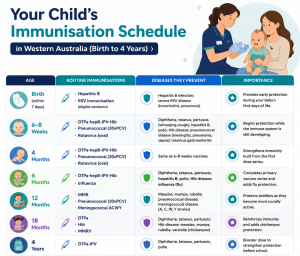
In Western Australia, children receive routine vaccinations from birth until four years of age under Australia’s National Immunisation Programme. These vaccines protect your children against serious infectious diseases and keep them healthy during their early years.
| Age | Routine Immunisations | Diseases They Prevent | Importance |
| Birth (within 7 days) | Hepatitis B, RSV immunisation (eligible newborns) | Hepatitis B infection; severe RSV disease (bronchiolitis and pneumonia) | Provides early protection during your baby’s first days of life. |
| 6–8 Weeks | DTPa-hepB-IPV- Hib, Pneumococcal (20vPCV), Rotavirus (oral) | Diphtheria, tetanus, pertussis (whooping cough), hepatitis B, polio, Hib disease, pneumococcal disease (meningitis, pneumonia, sepsis), rotavirus gastroenteritis | Begins protection while the immune system is still developing. |
| 4 Months | DTPa-hepB-IPV- Hib, Pneumococcal (20vPCV), Rotavirus (oral) | Same as 6–8-week vaccines | Strengthens immunity built from the first dose series. |
| 6 Months | DTPa-hepB-IPV- Hib, Influenza | Diphtheria, tetanus, pertussis, hepatitis B, polio, Hib disease, and influenza (flu) | Completes primary vaccine series and adds flu protection. |
| 12 Months | MMR, Pneumococcal (20vPCV), Meningococcal ACWY | Measles, mumps, rubella; pneumococcal disease; meningococcal disease (A, C, W, Y strains) | Protects toddlers as they become more socially active. |
| 18 Months | DTPa, Hib, MMRV | Diphtheria, tetanus, pertussis; Hib disease; measles, mumps, rubella, varicella (chickenpox) | Reinforces immunity and adds chickenpox protection. |
| 4 Years | DTPa-IPV | Diphtheria, tetanus, pertussis, polio | Booster dose to strengthen protection before school. |
Additional funded vaccines can be recommended for eligible Aboriginal children and children with certain medical risk conditions (MRC). These include vaccines such as Meningococcal B, additional Pneumococcal doses, Hepatitis A, Hepatitis B, RSV immunisation, and extra Meningococcal ACWY doses where clinically indicated. Your GP can advise which vaccines are recommended for your child.)
Your Child’s Vaccination Schedule Explained: What Happens at Each Visit
Each vaccine appointment has a purpose. Instead of just following a calendar, each visit is carefully timed to protect your child.
Birth (Within 7 Days)
Your baby’s childhood immunisation journey begins shortly after they’re born. Think of this as your baby’s very first layer of protection as they begin life outside the womb.
At this visit, they’ll receive the Hepatitis B vaccine, which helps protect against a virus that can affect the liver. Eligible newborns may also receive an RSV immunisation to help protect against respiratory syncytial virus (RSV), a common cause of serious chest infections in young babies.
6–8 Weeks
By now, you’re settling into life with your newborn, although it may still feel like every day brings something new!
This is your baby’s first major child vaccination appointment. They’ll receive the 6-in-1 vaccine, which protects against diphtheria, tetanus, whooping cough (pertussis), hepatitis B, polio, and Haemophilus influenzae type b (Hib). They’ll also receive protection against pneumococcal disease and rotavirus, with the rotavirus vaccine given as oral drops rather than an injection.
Eligible Aboriginal children and children with certain medical risk conditions also receive additional meningococcal vaccines at this visit.
4 Months
At four months, your baby is becoming more aware, curious and interested in the world around them.
This appointment is not a second bite at the cherry but a way of reinforcing the protection that already exists at six to eight weeks. These booster doses help your child’s immune system establish a strong and longer-lasting response as they continue to grow and interact with more people.
6 Months
Many newborns are rolling, sitting, or investigating everything in sight by 6 months. It is a thrilling period, but it means they are getting into contact with more germs.
This visit completes the primary 6-in-1 vaccine course and introduces the annual influenza vaccine, which is recommended from six months of age. While the flu is often thought of as a minor illness, it can cause serious complications in young children.
Depending on your child’s eligibility, your GP can also recommend additional funded vaccines, including extra pneumococcal or meningococcal vaccines for children with certain medical risk conditions.
12 Months
It seems like only yesterday you were taking your kid home from the hospital, and now they are celebrating their first birthday. By this age, many youngsters take their first steps, get more independence and spend more time among other children at playgroups or childcare.
As your child’s world grows bigger, so does their exposure to germs.
At this appointment, they’ll receive the MMR vaccine, which protects against measles, mumps, and rubella. They’ll also receive vaccines that continue their protection against pneumococcal disease and meningococcal ACWY.
Some children may also be eligible for additional funded vaccines, including Meningococcal B, RSV immunisation (for eligible children entering their second RSV season), or an additional hepatitis B vaccine for certain medical risk conditions.
18 Months
By 18 months, children are always on the go. They are climbing, exploring, touching everything they can find, finding the world with infinite interest.
This visit provides important booster doses that strengthen protection against diphtheria, tetanus, whooping cough (pertussis), and Haemophilus influenzae type b (Hib). Your child will also receive the MMRV vaccine, which adds protection against chickenpox (varicella) while continuing protection against measles, mumps, and rubella.
For eligible Aboriginal children, this appointment also includes the first dose of the Hepatitis A vaccine, providing additional protection against a disease that remains more common in some communities.
4 Years
Before your child heads off to school, there’s one final routine childhood immunisation appointment.
By now, they’re making friends, asking endless questions, and getting ready for an exciting new chapter. Starting school means more close contact with other children, so it becomes even more important that their vaccinations are up to date.
At this visit, your child receives booster doses that protect against diphtheria, tetanus, whooping cough (pertussis), and polio, helping maintain strong immunity during the school years.
Eligible Aboriginal children and children with certain medical risk conditions may also receive additional funded vaccines, such as hepatitis A or a pneumococcal vaccine, depending on their individual circumstances.
Prepare for Your Child’s Immunisation Appointment
It is quite normal to feel a little nervous about taking your child for a vaccination. The good news is that with a little planning, the experience can be a lot easier for you and your child.
Before the Appointment
Before your visit, let your GP know if your child:
- Has experienced a serious reaction to a vaccination before.
- Has a severe allergy to an ingredient in a medicine, food or immunisation.
- Has recently had a live vaccination or blood transfusion.
- Has a medical condition or treatment that affects their immune system.
- Is feeling unwell or has a high fever.
Furthermore, it is useful to bring your child’s health record or immunisation history with you so your GP can check which childhood immunisations are needed and update their records.
During the Appointment
Your GP will tell you which vaccines your baby is having. Also, the importance of that vaccine and any usual side effects you may notice afterwards.
Don’t be afraid to ask questions. Your GP can help with any questions you have regarding the Australian childhood immunisation schedule or vaccine safety.
After the vaccinations, you’ll be asked to remain at the clinic for around 15 minutes. This is a routine precaution that allows healthcare professionals to respond quickly should a rare allergic reaction occur.
What to Expect After the Vaccination
Most children only encounter moderate side effects that pass in 24 to 48 hours. Such symptoms are a natural indication that the immune system is responding to the vaccine.
The most common side effects include:
- Mild fever
- Redness or swelling at the injection site
- Fussiness or irritability
- Sleepiness
- Reduced appetite
If your child receives the Meningococcal B vaccine, your GP may consider giving your child paracetamol as prescribed, as this vaccine is more likely to cause fever in young children.
Serious reactions are very rare. But if your kid has trouble breathing, a high temperature that won’t go down, a seizure or any signs of a severe allergic response, get medical attention immediately.
What If Your Child Misses a Vaccine?
The important thing to remember is that missing a vaccine doesn’t usually mean your child has to start the schedule from the beginning.
Your GP can look at their immunisation history and make a personalised catch-up plan based on their age and previous child immunisation data. Catching up as soon as you can helps ensure your child gets the protection they need without unneeded repeat doses.
Keeping your child’s vaccinations up to date is important because it can affect:
- Childcare and kindergarten enrolment requirements.
- Access to certain Australian Government family assistance payments.
- Protection during outbreaks of vaccine-preventable diseases.
How Your GP Supports Your Child’s Immunisation Journey
A GP does much more than simply administer your child’s vaccinations. They help make sure your child stays on track with the recommended child immunisation schedule while providing personalised advice based on their age, medical history, and individual health needs.
Your GP can:
- Explain each vaccine, what it protects against, and why it’s recommended.
- Answer your questions about vaccine safety, side effects, and common parental concerns.
- Identify if your child is eligible for additional funded vaccines.
- Develop a personalised catch-up plan if vaccinations have been missed.
- Update your child’s Australian Immunisation Register (AIR) record after each visit.
- Refer your child to specialist immunisation services if additional care is needed.
Having a GP guide your child’s immunisation journey gives you trusted medical advice, accurate vaccination records, and the reassurance that your child is receiving the right protection at the right time.
Main Street Medical Centre | Perth’s Trusted Partner for Childhood Immunisation
At Main Street Medical Centre, our skilled GPs provide routine child vaccination services for newborns, toddlers and preschool children in line with the Australian National Vaccination Programme and current Western Australian guidelines.
If you still have questions about child immunisation, need advice about a missed appointment, or would like to book your child’s next vaccination, the team at Main Street Medical Centre is here to help.
Book an appointment with Main Street Medical Centre today
FAQs
Can my child still get vaccinated if they have a cold or mild illness?
Yes, if your child has a minor cold, runny nose, cough, or low-grade fever, they can safely receive their scheduled vaccines. However, if your child has a high fever or is seriously unwell, your GP might recommend delaying the appointment until they recover. If you’re unsure, contact your GP before cancelling or rescheduling the vaccination.
Are childhood vaccinations free in Western Australia?
Yes, children in Western Australia are eligible for free routine childhood immunisations through Australia’s National Immunisation Programme (NIP). Some children may also be eligible for other subsidised immunisations (including eligible Aboriginal children and children with some medical issues).
Is it safe for babies to receive multiple vaccines during one appointment?
Yes, babies can receive many immunisations at a single visit safely. Their immune systems are meant to deal with lots of germs every day. So receiving several vaccines at once does not overload them.
How can I check my child’s immunisation records in Australia?
Your child’s immunisation history is recorded on the Australian Immunisation Register (AIR). You can get an immunisation history statement through your Medicare account on MyGov, or your GP can provide one for you. These data are vital for child care, school enrolment and various government subsidies.
Can my child attend childcare if they are not fully vaccinated?
Generally, no. In Western Australia, children usually need to be up to date with their vaccinations to enrol in childcare, pre-kindergarten, or kindergarten. If your child isn’t fully vaccinated, they may still be eligible if they’re following an approved catch-up schedule or have a valid medical exemption. You’ll also need to provide an Australian Immunisation Register (AIR) Immunisation History Statement when enrolling.
Why does my baby need so many vaccines in the first two years?
Babies are vaccinated numerous times in their first two years since their immune systems are still developing. The well-developed programme protects them when they are most vulnerable to dangerous infectious diseases.
Can I delay my child’s vaccinations or spread them out?
It’s not recommended to delay your child’s vaccinations. Doing this can leave them unprotected against serious diseases for longer. Australia’s National Immunisation Programme schedule is carefully designed to provide protection when children need it most. If your child misses a vaccine, your GP can arrange a safe catch-up schedule.
Where can I get my child vaccinated in Perth or Western Australia?
Routine childhood vaccinations are available at GP clinics, community immunisation clinics, Aboriginal medical services, and participating public health services across Western Australia. If you’re looking for trusted childhood vaccinations in Perth, Main Street Medical Centre provides routine immunisations, catch-up vaccinations, personalised advice, and updates your child’s Australian Immunisation Register (AIR) record after each visit.
Medical Note: This guide is based on the current Western Australian childhood immunisation schedule and the Australian National Immunisation Program (NIP) at the time of writing. As recommendations can change and every child has different healthcare needs, always speak with your GP for personalised medical advice.