
Detailed Guide to Electrocardiogram (ECG/EKG): Procedure, Results & When It’s Urgent
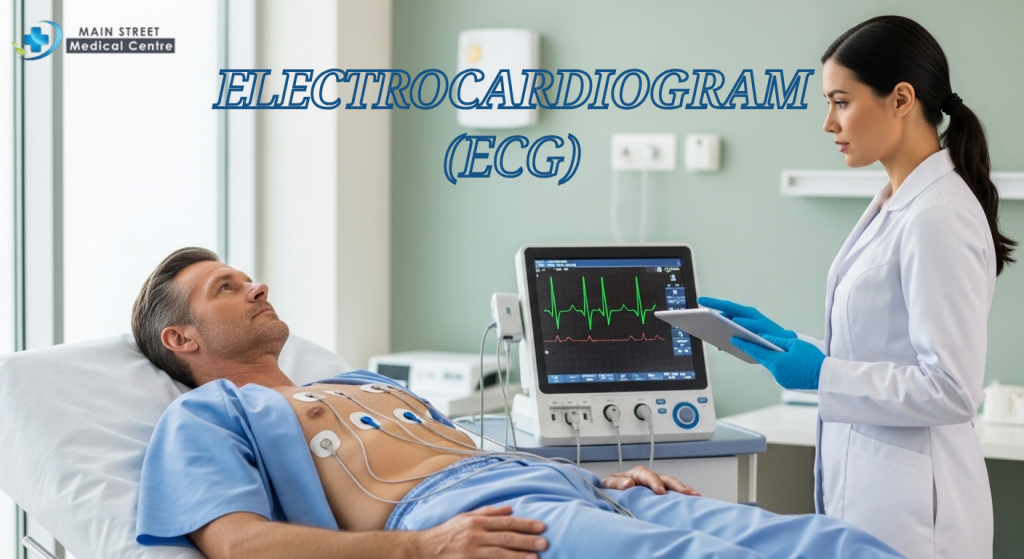
When something feels unusual with your heart, your GP may recommend an ECG test as one of the first diagnostic steps. But what exactly is an ECG test, and is it painful? What can it detect, and when is urgent care needed?
An ECG (electrocardiogram or EKG) is a quick and effective way to measure the heart’s electrical activity and help detect various cardiac conditions within minutes. It plays a vital role in diagnosing arrhythmias, identifying signs of heart attack, monitoring medication effects, and supporting immediate treatment decisions when symptoms are concerning.
In this guide, you’ll learn everything about ECG tests, including how they work, who needs them, results interpretation, risks, and when urgent medical attention is required. Let’s begin by understanding what an ECG test is and why it is essential for heart health assessment.
What Is an ECG Test? (Electrocardiogram Explained)
An electrocardiogram (ECG or EKG) is a quick, non-invasive test that records your heart’s electrical activity to assess heart rate, rhythm, and overall function.
Every heartbeat is triggered by tiny electrical signals. An ECG electrocardiogram test captures these signals and displays them as a wave pattern on a screen or printout. This pattern allows your GP to evaluate your heart rate, rhythm and overall electrical conduction.
ECG Testing is performed safely in a clinic. The test is painless and takes only a few minutes. A standard ECG is usually a 12-lead test, performed while you lie still. It provides a brief snapshot of your heart’s activity at that moment. In some cases, it may be done during exercise (stress testing) or over 24 hours (Holter monitoring) depending on your symptoms.
Now, let’s explore why would your doctor recommend ECG?
Why Is an ECG Test Done? (What It Helps Diagnose)
An ECG Test is one of the most important tools in routine cardiac assessment because it helps doctors quickly identify heart rhythm and structural concerns.
Your GP may recommend ECG Testing to:
- Diagnose cardiac conditions
- Investigate chest pain or tightness
- Assess palpitations or irregular heartbeat
- Evaluate dizziness or fainting
- Monitor how heart medication is working
- Review pacemaker function
- Check fitness before surgery
- Monitor your heart after a previous heart event
Because an ECG records your heart’s electrical activity, it can detect:
- Arrhythmias (irregular heartbeats)
- Signs of a current or past heart attack
- Reduced blood flow to heart muscle (ischaemia)
- Inflammation around the heart (pericarditis)
- Abnormal electrical pathways
- Heart chamber enlargement
In many cases, the result may show that your cardiogram normal pattern is reassuring; meaning the ECG is normal and your rhythm appears regular. However, even if an ECG is normal, your doctor may recommend further testing depending on symptoms and risk factors.
Now that you know why it’s done, let’s look at who actually needs an ECG.
Who Needs an ECG Test? (Symptoms, Risk Factors & Screening)
You may need an ECG Test if you are experiencing symptoms that could be heart-related or if you have certain risk factors.
Your GP may recommend an ECG if you have:
- Chest pain or pressure
- Shortness of breath
- Palpitations (fluttering, pounding or skipped beats)
- A fast or unusually slow pulse
- Dizziness or lightheadedness
- Fainting (syncope)
- Unexplained fatigue or weakness
- Reduced exercise tolerance
These symptoms can signal underlying electrical or structural heart issues that require further cardiac assessment.
ECG Screening for Risk Factors
Even without symptoms, you may benefit from ECG Testing if you:
- Have a family history of heart disease
- Have high blood pressure, diabetes or high cholesterol
- Are a smoker
- Have known heart disease
- Are starting certain medications
- Are preparing for surgery
An ECG helps monitor your heart and establish a baseline record for future comparison.
At Main Street Medical Centre in Osborne Park, our GPs assess each patient individually. ECG Testing is not done routinely without reason, it is recommended based on your symptoms, risk profile and clinical judgement.
Types of ECG Tests: Which One You Might Get
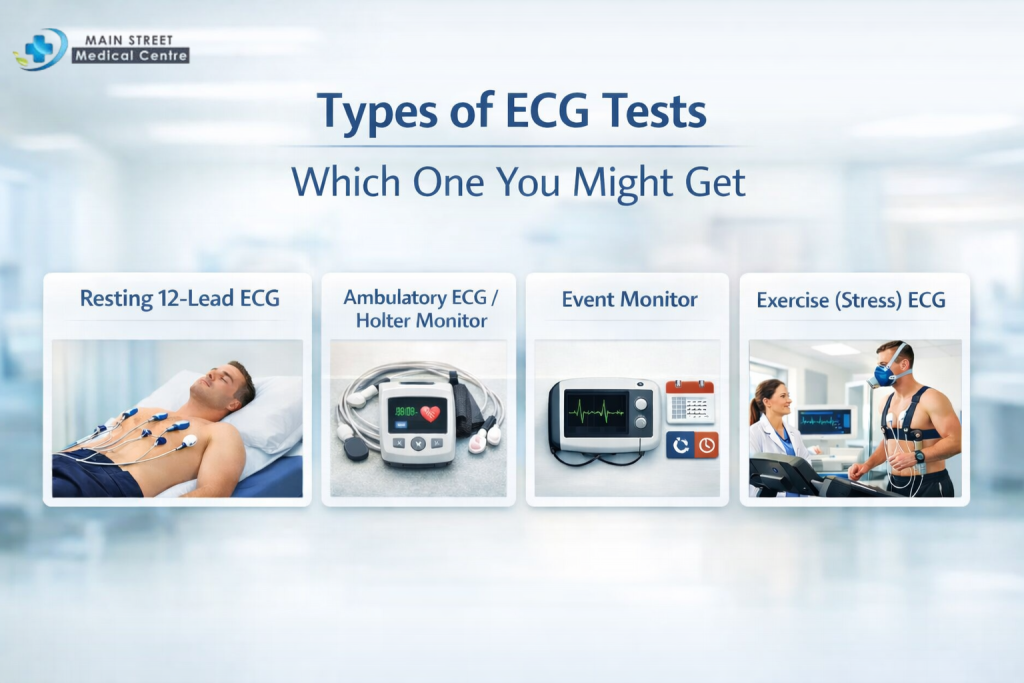
There are several kinds of ECG Testing, each designed for a specific purpose:
Resting 12-lead ECG (standard test EKG)
This is the most common test. You lie still while 10 electrodes are placed on your chest, arms and legs and a 12-lead tracing is recorded. It gives a short, high-quality snapshot of your heart’s electrical activity and is often the first test used in clinic or ED.
Ambulatory ECG / Holter monitor (24-hour ECG)
If symptoms are intermittent (palpitations, dizziness) your GP may fit a portable monitor that you wear while going about your day. A Holter usually records continuously for 24–48 hours and captures irregularities a resting ECG could miss.
Event monitor (intermittent recording, up to 30 days)
These are worn longer than a Holter and either automatically record when an abnormal rhythm occurs or are patient-activated when you feel symptoms. They’re useful if episodes are infrequent.
Exercise (stress) ECG
Performed while you walk on a treadmill or cycle, this test compares ECG tracings at rest and under controlled exercise stress to reveal areas of the heart that struggle with increased demand. If you can’t exercise, a medication can simulate the effect.
Who Performs an ECG And Who Reads the Results?
A trained health professional will perform the test and a clinician interprets the tracing.
- ECG is performed by nurse, cardiac technician or GP-clinic staff trained in ECG lead placement and recording. Larger centres sometimes use specialist cardiac technicians.
- Interpreted by your GP initially; complex or suspicious tracings are often reviewed by a cardiologist or sent to a reporting service for an expert read.
ECG Test Details: What to Expect?
An ECG Test is quick, safe and straightforward. Most patients are surprised by how simple the process is. Here’s exactly what happens before, during, and after an ECG Testing.
Before ECG Test – Preparation
You don’t need to fast or stop eating before an ECG electrocardiogram test. However, to ensure accurate ECG results:
- Avoid oily creams or lotions on your chest on the day of the test
- Wear a loose top that can be easily removed
- Avoid full-length tights or garments that block access to your legs
- Remove metal jewellery from your chest and arms
If necessary, small areas of chest hair may be gently shaved to allow proper ECG lead placement. Good skin contact ensures accurate recording of your heart’s electrical signals.
Once you’re ready, you’ll lie comfortably on an examination bed.
What Happen During the ECG – Lead Placement & Recording
A standard resting ECG uses 12 leads to monitor your heart from different angles.
During the EKG test:
- 6 electrodes are placed across your chest
- 6 electrodes are placed on your limbs (arms and legs)
- The electrodes attach using small adhesive pads
- Wires connect these electrodes to the ECG machine
This process takes about 10 minutes to attach the electrodes and complete a resting EKG test.
The machine then records your heart’s electrical activity and produces a wave pattern on screen or paper. The actual recording lasts only about 10 seconds. You will not feel any electricity. The ECG machine does not send energy into your body. It only measures existing electrical signals from your heart.
If you are having an exercise (stress) ECG, you’ll walk on a treadmill while the test monitors how your heart responds to exertion.
Once the recording is complete, the electrodes are removed and you can immediately return to normal activities.
After ECG Test – Results & Next Steps
In most cases, your GP will review your ECG Test results the same day.
Because ECG Testing provides immediate information, it helps guide quick clinical decisions during your appointment. If your cardiogram is normal, your doctor may reassure you and continue monitoring your symptoms.
If the ECG shows abnormalities, the next steps depend on the findings. You may require:
- Blood tests (for example, cardiac enzymes)
- An echocardiogram (ultrasound of the heart)
- Extended heart rhythm monitoring (Holter monitor)
- Referral for further cardiac assessment
- In urgent cases, immediate hospital evaluation
An ECG is a powerful first-line diagnostic tool. But understanding what the results actually mean is just as important as the test itself. So, let’s discover how ECG results are interpreted.
ECG Results Explained: What Your ECG Shows and What It Means
An ECG test produces a tracing; a wavy line that represents the electrical signals that make your heart beat. Clinicians read that tracing to assess heart rate, rhythm and conduction, and to look for patterns that point to specific problems. Simple, the ECG tells your care team how your heart is working electrically in that moment.
Understanding the ECG waves:
- P wave — signals from the atria (upper chambers).
- QRS complex — the strong spike when the ventricles contract.
- T wave — the heart recovering after each beat.
The timing and shape of these waves (and the distances between them) determine whether a tracing looks normal. A consistent, repeating pattern usually means the ECG is normal. Deviations point to specific issues.
Problems an ECG Can Help Diagnose
An ECG can help diagnose cardiac conditions such as:
- Irregular heart rhythms (arrhythmias)
- Evidence of a current or previous heart attack
- Ischaemia (reduced blood supply to the heart muscle)
- Enlarged heart chambers
- Electrical conduction disorders
- Widened QRS or bundle branch blocks
- Certain electrolyte imbalances
In some cases, your doctor may recommend additional tests such as an echocardiogram, blood tests, or extended heart rhythm monitoring to confirm the diagnosis.
What If the ECG is Abnormal?
If the ECG shows concerning changes, your clinician will act based on the finding and your symptoms. Possible steps include:
- repeating the ECG
- ordering blood tests (cardiac enzymes)
- arranging an echocardiogram
- starting or adjusting medications
- wearing a Holter monitor
- referring to a cardiologist for further assessment
In emergencies, immediate transfer to hospital may be required.
When You’ll Get ECG Results?
Often your GP can review and explain the ECG the same day Many clinics provide same-day reporting and rapid specialist advice where needed. Routine or pre-op ECGs may be reported later at your follow-up appointment. Your ECG tracing is kept on record for future comparison.
When To Call Your GP or Emergency Services
Contact your GP if you haven’t heard results after a few days, your symptoms worsen, or you have new concerns.
Call 000 (ambulance) or go to ED immediately if you experience severe chest pain, sudden shortness of breath, fainting, or other signs of a heart attack. An ECG is time-sensitive in these situations and should be performed and reviewed rapidly.
How Soon Patient Recovers After An ECG?
You can usually go back to your normal activities straight away. A resting or ambulatory ECG is non-invasive and needs no recovery time. The technician simply removes the sticky electrodes and any adhesive can be wiped off. For an exercise (stress) ECG you may need a few minutes sitting quietly so your heart rate and breathing return to normal.
Are There Any Risks or Complications with an ECG Test?
An ECG electrocardiogram test is low risk. Most people experience no complications. Possible minor issues include:
- Skin irritation or redness where adhesive pads were attached (usually temporary).
- Discomfort during a stress test — shortness of breath, fatigue or chest discomfort can occur while exercising; the test is supervised and stopped if needed.
- Very rarely, false alarms on monitoring devices can cause anxiety or unnecessary follow-up tests.
For emergency symptom monitoring, clinicians balance the small inconvenience of monitoring with the clinical benefit of timely diagnosis.
Alternatives & Extended Monitoring – When A Single ECG Isn’t Enough
A resting 12-lead ECG is a quick snapshot. Excellent for many problems but not ideal if symptoms are intermittent. Alternatives include:
- Holter monitor (ambulatory ECG) — continuous recording for 24–72 hours (or longer) to catch sporadic arrhythmias.
- Event monitor / patch recorders — used for longer monitoring (weeks); they record when you push a button or automatically when abnormal rhythms occur.
- Exercise (stress) ECG — assesses blood flow and electrical response during exertion.
- Echocardiogram, blood tests (troponin) or angiography — when structural or blood-flow problems are suspected.
These options let your clinician “monitor your heart” over time rather than just at one moment, increasing the chance of capturing the problem that causes your symptoms.
What if I Delay or Refuse an ECG?
Delaying or refusing an ECG may delay diagnosis. If symptoms are concerning (especially chest pain, breathlessness, fainting), a timely ECG can be lifesaving — Australian guidance recommends ECG recording and assessment within 10 minutes for suspected acute coronary syndromes.
If you decline testing, your clinician will document the discussion, continue symptom monitoring, and consider alternative evaluations — but in emergencies prompt ECG and hospital care may be required.
Worried about chest pain, palpitations or dizziness? Don’t wait!
Schedule an ECG Test at Main Street Medical Centre Today
At Main Street Medical Centre, our GPs offer prompt, accurate ECG Testing and follow-up. We provide mixed-billing options and same-day review when clinically needed. If you’re experiencing worrying symptoms, early assessment matters.
Call us to discuss your symptoms and arrange an ECG.
FAQs
What does an ECG test for?
An ECG records your heart’s electrical activity to check heart rate, rhythm and conduction. It helps diagnose arrhythmias, detect signs of a heart attack, and identify other electrical or structural problems.
What’s the difference between ECG and EKG?
There is no difference, both mean electrocardiogram. “EKG” is from the German Elektrokardiogramm; “ECG” is the English abbreviation. Use either term interchangeably.
Is an ECG painful?
No. A resting ECG is painless. You may feel minor skin irritation from adhesives; an exercise ECG can cause breathlessness or chest discomfort while exercising, but the test is supervised and stopped if necessary.
Which patients need an ECG?
People with chest pain, palpitations, dizziness, fainting, breathlessness, or unexplained fatigue, and those with heart disease risk factors or family history, commonly need an ECG. Your GP decides based on symptoms and risk.
Do I need to fast or stop medications before an ECG?
Generally, no. Eat and take usual medications unless your GP gives specific instructions, for example before a stress test or if certain drugs affect the heart rhythm.
How long does an ECG procedure take?
A resting 12-lead ECG takes about 10 minutes to attach and usually only 10 seconds to record; allow up to 30 minutes for check-in and explanation. Holter or event monitors record over days to weeks.
What is an ECG scan in pregnancy?
An ECG is safe in pregnancy (no radiation). It helps assess maternal heart rhythm and rate when indicated. Your GP will advise if necessary.
Can an ECG detect blocked arteries?
An ECG can show signs of reduced blood flow (ischaemia) or a heart attack, but it cannot visualise blockages. If blocked arteries are suspected, your GP may order a stress test, blood tests or imaging (angiography).
Does age affect ECG results?
Yes. Normal ECG patterns change with age and co-existing conditions; clinicians interpret results in the context of your age, symptoms and medical history.
